
Universal Design for Learning (UDL) is a research-based framework created by CAST to improve and optimize teaching and learning for all students based on scientific insights into how the human brain learns.
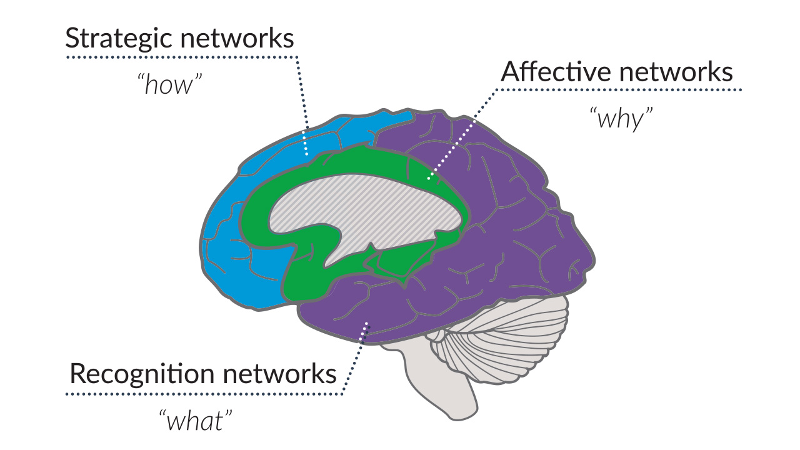
The CAST UDL Guidelines help educators address the diversity in learning in three main categories:
- Engagement (the why of learning): recruiting interest, sustaining effort and persistence, and self-regulation.
- Representation (the what of learning): perception, language and symbols, and comprehension.
- Action & Expression (the how of learning): physical action, expression and communication, and executive function.
UDL and the Learning Brain
What we know about the brain is central to the Universal Design for Learning Framework. Knowing key facts about the brain from a UDL perspective can help inform learning design to address learner variability. Find out more in this downloadable resource designed for educators.
CAST (2018). UDL and the learning brain. Wakefield, MA: Author. Retrieved from http://www.cast.org/products-services/resources/2018/udl-learning-brain-neuroscience

Links:


UDL at a Glance
What is UDL?
We are here to help!
Please feel free to reach out with any questions or support requests you may have. Our Universal Design for Learning Consultant is just a call or email away!

Nicole Herbert, M.Ed.
419.720.8999 ext. 138Assistant Director | Community School Lead | Continuous Instructional Improvement Lead | EdSteps | Principal Leadership | UDL